Login
Contact


Exhibit Info.
Hanoi International Electronics and Smart Manufacturing Exhibition 2027

Exhibition Dates
Show Dates: -
Show Times: 9:30 ~ 17:30 (Closing at 15:30 on the last day)
* Children under 16 are not permitted. Please dress appropriately; slippers are not allowed. All pets are prohibited.
* Flip-flops/slippers are not allowed

Venue
Vietnam Exposition Center (VEC)
Trung tâm Triển lãm Việt Nam, Đường cầu Tứ Liên, Đông Anh, Hà Nội
Organizer
Organizer
Vinexad National Trade Fair & Advertising JSC
Yorkers Trade & Marketing Service Co., Ltd.
Chan Chao International Co., Ltd.
Yorkers Trade & Marketing Service Co., Ltd.
Chan Chao International Co., Ltd.
Supporter / Sponsor
Official Supporter
Vietnam Automation Association (VAA)
Vietnam Association of Mechanical Industry (VAMI)
Ho Chi Minh City Automation Association (HAuA)
Vietnam Association of Mechanical Industry (VAMI)
Ho Chi Minh City Automation Association (HAuA)
Visitor Profile
- Electronics Manufacturing (EMS / OEM / ODM)
- PCB Manufacturing
- Semiconductor Manufacturing & OSAT
- Electronic Components & Materials Supply Chain
- Automation Equipment & System Integrators
- Factory Automation & Smart Manufacturing Departments
- Machinery & Machine Tool Manufacturing
- Metal Processing & Precision Parts Manufacturing
- Mold Design & Manufacturing
- Automotive & Motorcycle Parts Manufacturing
- Optoelectronics & Display Manufacturing
- Energy & Storage System Integrators
- Electric Vehicle & New Energy Vehicle Industry
- Laser Processing & Equipment Manufacturing
- Testing, Inspection & Measurement Equipment Manufacturers
- Industrial Chemicals & Materials Supplier
- Environmental Protection & Waste Management (EHS / Circular Economy)
- Industrial Park Development & Investment Units
- Government & Industry Promotion Agencies
Types of Booths
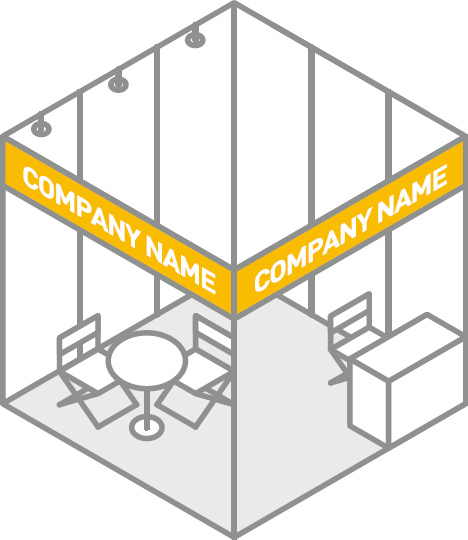
Shell Scheme (9 sqm)
Fee: USD$2,970 (tax excluded)
Including:
- 1 Set of 3-sided partition system
- 1 Carpet
- 1 Fascia board
- 3 Chairs
- 3 Spotlights
- 1 Information desk with a lockable cabinet
- 1 Trash bin
- 1 Set of 5A/220V single-phase power outlet
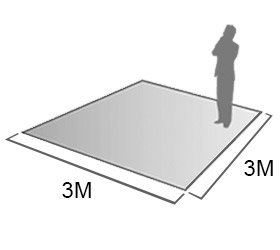
Space Only (9 sqm)
Fee: USD$2,700 (tax excluded)
Remarks:
- Each Shell Scheme Booth will be provided with 220V/500W electricity free of charge. Additional power supply and drainage will be at exhibitor's expense.
- The raw space booth is without partition, carpet, or any display facility. Booth facilities are available on a rental basis from the official contractor.
To ensure the smooth operation of the exhibition and to
safeguard the rights and interests of all exhibitors, the
organizer has established the following Terms of Contract. These
guidelines cover rights and responsibilities during the
exhibition, booth usage rules, exhibit safety, and related
management matters. All exhibitors are advised to review the
regulations carefully before participation. Submission of a
booth application shall be deemed as acceptance of all terms and
conditions stated herein.
- Rights: The Organizer, namely, YORKERS TRADE & MARKETING SERVICE CO., LTD. reserves all rights in connection with “ Hanoi International Electronics and Smart Manufacturing Exhibition.”
-
Terms of References: Under these rules and
regulations, the term “exhibitor” shall include all
employees, staff, and agents of any company,
partnership, firm, or individual to whom space has
been allocated for the purpose of exhibiting. The term
“contract” means the contract for exhibition space at
the Exhibition between the show management and the
Exhibitor which incorporates the rules and
regulations.
Damage to the tradeshow area: Exhibitors are required to indemnify the Organizers against any claim made against them in respect of damage to tradeshow halls and the venue caused by their stand exhibits, staff, or agents acting on their behalf. - Insurance: Security & Insurance of the exhibits and the property of the stand will be the responsibility of the individual Exhibitors. The Organizers shall not be responsible in any way for personal injury to the Exhibitor or his staff, agents, invitees, or licensees, however caused.
- Consequential Loss: In case of the tradeshow being cancelled or suspended in whole or in part for causes not in the Organizer’s control, the Organizers do not accept any consequential liability.
-
Stand Alteration:
- No alteration to the size of an exhibitor’s stand is permitted without the prior written approval of the Organizers.
- Conversion of an allotted shell scheme site to free design is not permitted.
- In the event of an exhibitor’s display causing inconvenience to other exhibitors, the Organizers reserve the right to ask for the required alterations.
- The Organizers reserve the right to modify the layouts of stand sites, Business Desk (Table Space), and gangway, and allot alternate stands.
- Designers are particularly requested to avoid designs which block or box in other Exhibitor’s stands.
- Reasonable fixings may be allowed to the flush plywood wall of the shell scheme without damaging them in any way, but no alterations in the fascia structure or format are permitted. Any attempt to do this will involve restoration of the original structure at the expense of the exhibitor or his agent.
- In case the actual size of a stand is less than the booked space, the Organizers would be liable to refund the cost of the discrepancy in rounded meters but would not be liable for any consequences thereof.
- Stand displays are not allowed to overhang the allotted area, nor are any obstructions permitted near gangways, fire points, extinguishers, or emergency exits.
- Stand Interiors: Exhibitors are free to decorate their stands to project the right image of their products and company, but they should not cause permanent damage to the walls, panels, or floor through use of nails, paints, or any other such activity.
- Equipment Interference: No equipment can be operated which produces excessive noise or causes electrical interference or other annoyance.
- Stand Allocation: The Organizers reserve the absolute right of final stand allocation and may offer alternate stands of equivalent size to confirmed exhibitors.
- Default on Payment: The Organizers reserve the right to cancel any reservation of space in the event of an Exhibitor not having paid the participation charges by due dates. Payment already received will be forfeited in such cases.
- No Subletting: Exhibitors may not assign, sublet, or grant licenses in respect of the whole or part of the stand. Cards, advertisements, or printed matter of firms or persons who are not qualified exhibitors may not be exhibited or distributed from any stand, except that an exhibitor may distribute cards, advertisements, or printed matter of companies or firms which are subsidiaries of exhibitors, the exhibitor’s ultimate holding company, or foreign principals.
- Promotion by Exhibitors: In all communication inviting patrons to visit their stand, exhibitors must specify clearly that registration is required for free entry to the exhibition upon presentation of an invitation card/letter.
- Hoarding / Banners: No hoarding, banners, etc. will be allowed at the venue or on the roads in the vicinity unless their design, specification, installation, and location have been approved by the Organizers. Any unauthorized display is liable to be removed by the Organizers without notice at the exhibitor’s cost.
- Security: Although a twenty-four-hour security service will be in operation throughout the tradeshow, exhibitors should take all possible precautions to minimize loss or damage to their equipment, merchandise, or display.
- Exhibit Removals at the End of Trade Show: Exhibits must be removed from the stands within 18 hours after the exhibition is over. Should an Exhibitor fail to vacate his stand space or the premises by the time specified by the Organizers, he shall be liable for any charges incurred by the Organizers as a result thereof.
- Exit Permit: No material/exhibits will be allowed to be taken out of the hall without a valid exit pass obtained from the Organizers, after clearing all dues of the organizers and other service providers at the exhibition.
- Right to Enter the Tradeshow: The Organizers and those authorized by them have the right to enter the tradeshow premises at any time to execute work, repairs, alterations, or for other purposes.
- General Lien: All exhibits are subject to a general lien in favor of the Organizers for all sums due, whether for unpaid stand charges or otherwise, from an exhibitor to the Organizers.
- Verbal Agreement: Any verbal agreements concerning any aspect of the contract or the tradeshow are not valid unless confirmed in writing.
- No inflammable articles may be stored in the exhibition area.
- Electrical Installations: All on-site electrical installations must be carried out by the officially appointed electrical contractor before connection to the main supply.
- No refund of paid amount under any circumstances.

Why Hanoi ?
Industrial Potential in Northern Vietnam
- Electronics and High-Tech Clusters: Northern Vietnam is a key destination for foreign investment in electronics and IT, machinery, specialized healthcare, metal processing, automobiles, and supporting industries, with a complete industrial chain gradually taking shape.
- Strong Economic Momentum: Vietnam’s GDP grew by 8.02% in 2025, the highest rate among major ASEAN economies.
- Export-Led Industrial Upgrading: In the first half of 2026, total trade reached about USD 549.69 billion, up 27.1% year on year. Electronics and components exports totaled USD 92.5 billion, accounting for over 30% of national exports and reflecting rapid manufacturing transformation.
- Diversified Export Markets: Key markets include the United States, China, Hong Kong, the European Union, and South Korea, reducing reliance on any single country.
- Policy and Global Connectivity: Vietnam has signed 18 free trade agreements (FTAs), helping lower tariffs and market barriers.
- A New ASEAN Smart Manufacturing Hub: The exhibition will be held at the world-class Vietnam Exposition Center (VEC), offering a large venue and convenient access while reinforcing Hanoi’s role as an emerging ASEAN trade and technology hub.
Why Now ?
Now Is The Best Time To Enter
- Diversified Supply Chains: As global supply chains shift, Vietnam’s growing domestic market and tariff advantages make it a key base for supply-chain diversification and new manufacturing investment.
- Manufacturing Transformation: Electronics exports are outpacing overall exports, driving demand for high-value products and advanced manufacturing technologies.
- Urgent Automation Demand:
- Heavy reliance on imported components → Opportunities to introduce automation and increase local sourcing.
- Dependence on foreign advanced equipment → Strong potential for smart manufacturing systems and integrated solutions.
- Low labor productivity → Automation can reduce costs and raise efficiency and output.
- Growing demand in railways, agricultural machinery, shipbuilding, and automotive components → Foreign companies can expand by aligning with government policies and industrial upgrading.
Why PCB ?
Multinational Companies Build a Complete PCB Industry
Cluster
Major companies from Taiwan, Japan, Korea, and China
are actively investing, forming industrial clusters
and steadily upgrading technological capabilities.
- Taiwanese Companies
Firms like Foxconn have a strong presence in Northern Vietnam, producing laptops, servers, automotive electronics, and networking equipment, driving local high- to mid-end PCB production and supply chain integration. - Chinese Companies
Firms like Kingboard and Shenghong Technology focus on multilayer boards and HDI, adopting long-term capacity strategies to strengthen regional manufacturing and export networks. - Japanese Companies
Focusing on high-reliability substrates and automotive boards, companies such as MEKTEC (Hung Yen), MEIKO (Hanoi/Hai Duong), Fujikura, Sumitomo Electric, and Nitto Denko (Southern Vietnam) support automotive electronics and communications applications, driving specialized manufacturing. - Korean Companies
Focusing on high-value substrates and AI/HPC applications, firms like SEMCO (Samsung Electro-Mechanics), Korea Circuit, BHflex, and TLB are actively expanding capacity in Vietnam. Samsung has invested over USD 20 billion, making Vietnam a global manufacturing and R&D hub.
Trends and Investment Opportunities
Vietnam’s PCB industry is shifting to high-end
applications like AI servers, automotive electronics,
and next-gen memory. With ongoing investment from
Taiwan, China, Japan, and Korea, clusters and supply
chains are maturing, creating strong opportunities in
smart manufacturing, automation, and high-value
components, making Vietnam a key ASEAN gateway.
Why Hanoi ?
Industrial Potential in Northern Vietnam
- Electronics and High-Tech Clusters: Northern Vietnam is a key destination for foreign investment in electronics and IT, machinery, specialized healthcare, metal processing, automobiles, and supporting industries, with a complete industrial chain gradually taking shape.
- Strong Economic Momentum: Vietnam’s GDP grew by 8.02% in 2025, the highest rate among major ASEAN economies.
- Export-Led Industrial Upgrading: In the first half of 2026, total trade reached about USD 549.69 billion, up 27.1% year on year. Electronics and components exports totaled USD 92.5 billion, accounting for over 30% of national exports and reflecting rapid manufacturing transformation.
- Diversified Export Markets: Key markets include the United States, China, Hong Kong, the European Union, and South Korea, reducing reliance on any single country.
- Policy and Global Connectivity: Vietnam has signed 18 free trade agreements (FTAs), helping lower tariffs and market barriers.
- A New ASEAN Smart Manufacturing Hub: The exhibition will be held at the world-class Vietnam Exposition Center (VEC), offering a large venue and convenient access while reinforcing Hanoi’s role as an emerging ASEAN trade and technology hub.
Why Now ?
Now Is The Best Time To Enter
- Diversified Supply Chains: As global supply chains shift, Vietnam’s growing domestic market and tariff advantages make it a key base for supply-chain diversification and new manufacturing investment.
- Manufacturing Transformation: Electronics exports are outpacing overall exports, driving demand for high-value products and advanced manufacturing technologies.
- Urgent Automation Demand:
- Heavy reliance on imported components → Opportunities to introduce automation and increase local sourcing.
- Dependence on foreign advanced equipment → Strong potential for smart manufacturing systems and integrated solutions.
- Low labor productivity → Automation can reduce costs and raise efficiency and output.
- Growing demand in railways, agricultural machinery, shipbuilding, and automotive components → Foreign companies can expand by aligning with government policies and industrial upgrading.
Why PCB ?
Multinational Companies Build a Complete PCB Industry Cluster
Major companies from Taiwan, Japan, Korea, and China are
actively investing, forming industrial clusters and steadily
upgrading technological capabilities.
- Taiwanese Companies
Firms like Foxconn have a strong presence in Northern Vietnam, producing laptops, servers, automotive electronics, and networking equipment, driving local high- to mid-end PCB production and supply chain integration. - Chinese Companies
Firms like Kingboard and Shenghong Technology focus on multilayer boards and HDI, adopting long-term capacity strategies to strengthen regional manufacturing and export networks. - Japanese Companies
Focusing on high-reliability substrates and automotive boards, companies such as MEKTEC (Hung Yen), MEIKO (Hanoi/Hai Duong), Fujikura, Sumitomo Electric, and Nitto Denko (Southern Vietnam) support automotive electronics and communications applications, driving specialized manufacturing. - Korean Companies
Focusing on high-value substrates and AI/HPC applications, firms like SEMCO (Samsung Electro-Mechanics), Korea Circuit, BHflex, and TLB are actively expanding capacity in Vietnam. Samsung has invested over USD 20 billion, making Vietnam a global manufacturing and R&D hub.
Trends and Investment Opportunities
Vietnam’s PCB industry is shifting to high-end applications
like AI servers, automotive electronics, and next-gen memory.
With ongoing investment from Taiwan, China, Japan, and Korea,
clusters and supply chains are maturing, creating strong
opportunities in smart manufacturing, automation, and
high-value components, making Vietnam a key ASEAN gateway.
Keen on exhibiting ? Contact Us for Exhibition Wonders!
Please make sure to fill in the correct information below and
we will contact you shortly.